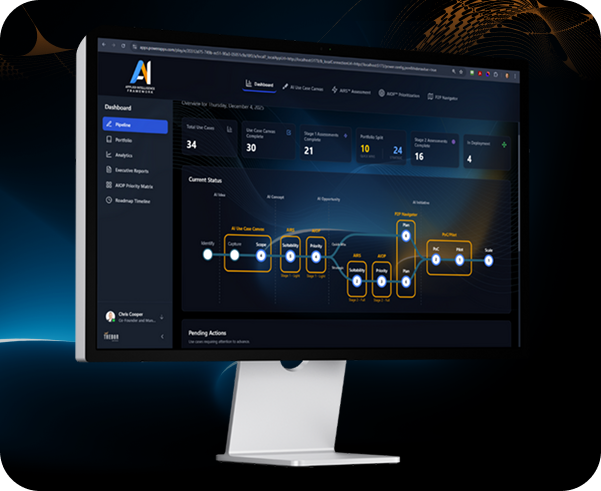
Move AI from emerging ideas to structured execution.

AIF gives AI adoption a clear operating path: capture the idea, test the value, decide the next move, sequence the work, prove the outcome, and scale what works.

Why the operating model matters

AI activity is not the same as AI value.

Organizations are under pressure to identify where AI can improve performance, reduce cost, increase speed, or create new advantage. But opportunity identification is only the beginning.
The harder work is turning the right ideas into measurable outcomes: clear use cases, defensible priorities, funded initiatives, disciplined pilots, and validated business results.
AIF gives AI work a structured operating path from opportunity discovery to outcome validation, so leaders can decide what to pursue, what to fund, what to scale, and what to stop.

How it works

A process built for real implementation

The Trebor Advantage is a five-step workflow that moves your organisation from AI ambiguity to deployed, measurable outcomes — with clear accountability at every stage.

Assess & Define Opportunities

Evaluate your business to uncover high-impact AI use cases and clearly define where AI can drive measurable value.

Design AI Roadmap

Create a structured, prioritized roadmap with the right architecture, tools, and managed service strategy.

Execute & Optimize

Implement AI solutions, integrate them into workflows, and continuously improve performance for long-term impact.

AIF use case lifecycle

A clear path from AI opportunity to measurable outcome.

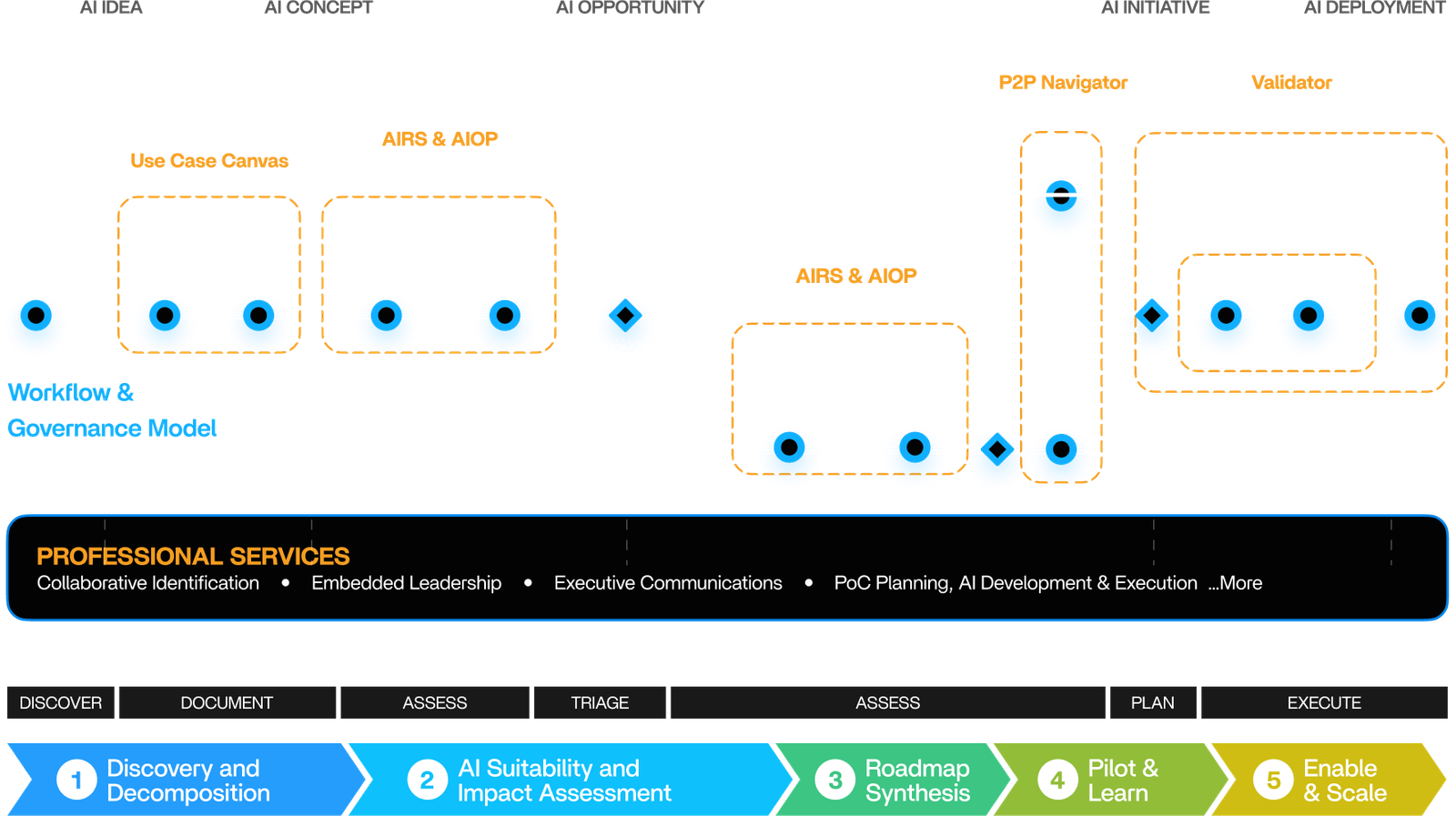
Every AI use case moves through a common lifecycle, so leaders can see what stage the work is in, what evidence supports the next decision, and how value will be measured as it advances.

AI Idea

A potential opportunity to improve a workflow, KPI, cost position, risk profile, or customer outcome.

AI Concept

A structured use case with a defined problem, owner, scope, success criteria, and value hypothesis.

AI Opportunity

An assessed use case with enough evidence to decide whether to fast-track, deepen, defer, or stop.

AI Initiative

An approved opportunity sequenced into the roadmap with ownership, dependencies, KPIs, and an execution plan.

AI Deployment

A solution operating in the workflow, with adoption and business value tracked against expected outcomes.

The AIF workflow

Every step improves the next decision.

AIF moves AI work through a connected decision path. The result is a repeatable operating model where AI initiatives advance based on evidence, not momentum.

From qualified to quantified

Move beyond "we think this will help."

Early AI opportunities often begin with a reasonable belief. A workflow looks inefficient. A process feels slow. A customer or employee experience appears ready for improvement.
That is enough to qualify interest. It is not enough to make confident investment decisions.
AIF turns promising use cases into directionally quantified business cases. Leaders can see the expected KPI impact, investment posture, ROI logic, and level of diligence required before work moves forward.

Qualify the opportunity

The AI Idea Canvas, AIRS, and AIOP structure the initial judgment. The goal is to clarify whether the use case is real, relevant, feasible, and worth a closer look.

Quantify the case

KPI-based value modeling, investment modeling, and financial insights translate the opportunity into measurable decision logic. The case moves from “it should help” to “here is where value should show up.”

Match diligence to the decision

Not every use case needs the same depth of analysis. Quick wins need enough evidence to move fast. Strategic candidates need deeper assessment before major commitment.

Validate the outcome

The same value logic carries into PoC, pilot, and scale. Expected value can then be compared against attained value, so leaders know what worked and what did not. 

The operating shift

AI leadership conversations change.

Without an operating model, AI conversations often drift toward the next tool, the next pilot, or the next quarterly update on activity.

AIF changes the conversation. Leaders can focus on where AI should be applied, why it matters, what should move next, and whether value is being realized.

Clarity

KPIs and OKRs, not tool demos.

Leadership sees the business case, expected value, and decision required.

Workflow

Where, when, and why.

AI work moves through a structured path, so technology supports the process instead of driving it.

Intent

Business strategy leads.

AI decisions are tied to measurable priorities, not disconnected experimentation or tool spend.

Explore the next layer

See how the operating model is supported.

Manage the work in one place.

Platform
See how the AIF Tool Suite supports intake, assessment, planning, governance, and value tracking.

Choose the right level of support.

Engagement
See how Trebor supports portfolio creation, execution alignment, and executive oversight.

Return to the executive case.

Overview
See why AI risk has moved upstream and how AIF helps leaders turn decisions into outcomes.

Our testimonial

Real Results From Real Partnerships

The next step in your AI journey

Lead the conversation on where AI drives the next business gain.

Book an executive briefing and see how AIF helps connect AI opportunities to outcomes your organization already cares about: revenue, margin, speed, quality, customer value, and differentiation.
Move beyond another update on tools, pilots, and AI activity. Start shaping the stronger conversation: where AI should contribute, what evidence is needed, and how value can be proven.
Be the leader who turns AI ambition into business direction.
See how AIF gives you the structure to move AI from enthusiasm to measurable contribution.